An open space combines several rooms into one. The idea is used increasingly in new homes, and often in luxury houses. In apartments, removing walls makes a small floor area feel larger and lets light reach further into the plan.
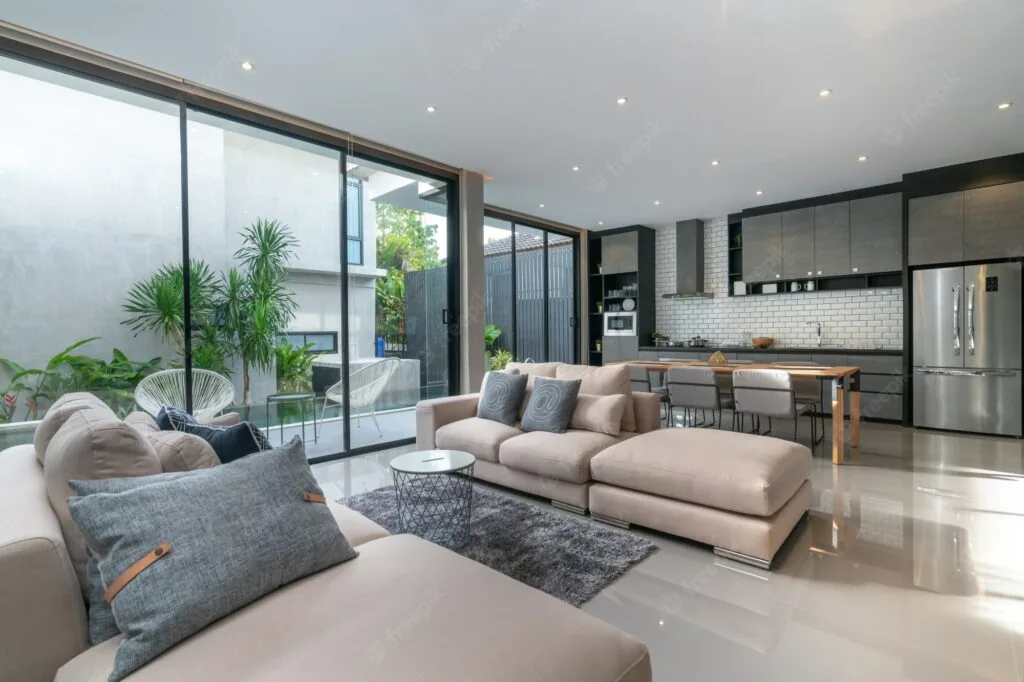
Open planning has clear advantages and a few drawbacks, and both are worth weighing before the design of a house is fixed.
Advantages and disadvantages in homes with open spaces
Light. The main characteristic of an open space is that it lets light enter and pass through, so the room receives daylight for more hours of the day. That also reduces the electricity used for lighting.
Where there is generous floor area, large windows make sense: they bring in daylight and cross ventilation, and they make the space feel bigger. Check the orientation of the windows and how much direct sun they receive. Depending on the decoration you have in mind, UV-protection curtains may be needed to keep the room from overheating.
Grouping of rooms. Combining rooms uses square meters that would otherwise be lost to walls and hallways. The classic example is a kitchen open to the dining room or the living room.
Keep in mind that the activities sharing the space have to be compatible with one another. If they are not, it is better to keep those rooms separate.
Social contact. An open layout makes it easier to be together, whether that means everyday family life or receiving and looking after guests. The trade-off is a loss of privacy for certain activities.
How the space feels. One large room usually feels more spacious, stable and harmonious, and good decoration and a certain amount of order add to that sense of well-being. Open spaces work less well in a house where order is hard to maintain, because the whole room then looks untidy.
How to tell whether an open space suits your future house
Weigh the points above, then ask what you actually need from that space, which activities will take place in it, and whether those activities are compatible with one another. Lighting is covered in more detail in the importance of light in architecture.