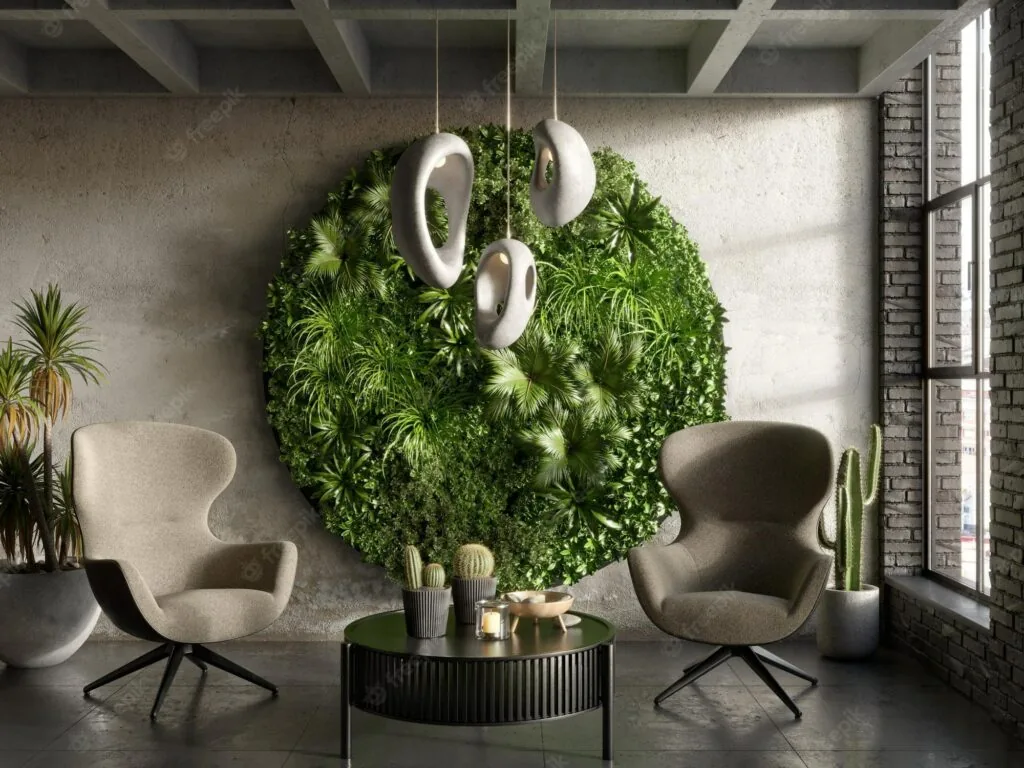
Urban jungle is a decoration style that brings plants and other nature-linked elements indoors. The aim is to add greenery to a flat or a house and make the rooms feel warmer.
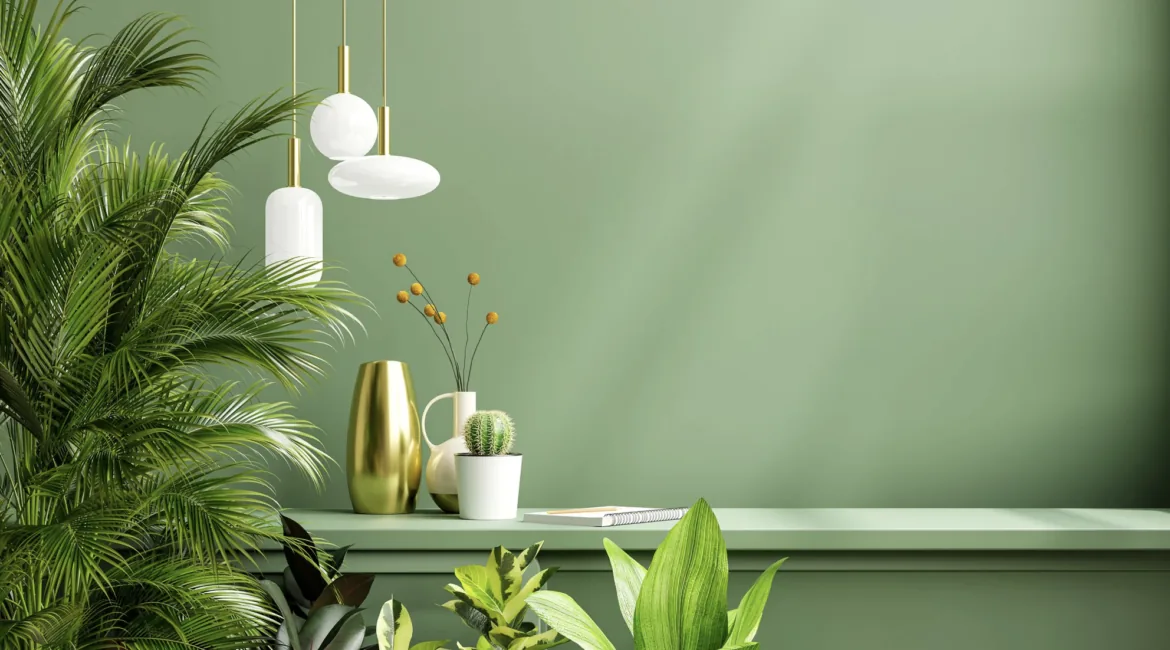
The style is not only about appearance. Plants create a calm atmosphere, and living with them has a positive effect on physical and mental well-being. Urban jungle grew out of the wish of people in large cities to be closer to nature, and it is closely related to biophilic design, which looks at how buildings can reconnect people with the natural world.
Growing interest in sustainability has also made indoor planting more popular in recent years.
When to use urban jungle in a project
The first condition is that the client is willing to look after the plants regularly. Without that, the style does not work.
Urban jungle is also a striking style, so it suits interiors that are meant to have personality.
It works in a property of any size. In small spaces the composition simply needs more planning, which the tips below cover.
Most plants need light and ventilation, so the style is easiest to apply in the brighter parts of a home, such as a balcony or a living room with good windows.
Tips for applying urban jungle
Choose species for the space. Most areas need good light and ventilation, but some species need direct sun and should be placed on a balcony or another bright spot. Large plants often struggle in small rooms, so several smaller species distributed evenly tend to work better.
Prefer shade-tolerant species. If a room receives no direct sun, choose plants that tolerate shade and simply open the curtains and windows. Ferns, snake plants and monstera are common choices.
Consider a vertical garden. A vertical garden makes good use of the space and suits both large and small rooms. The structure can be built from pallets, slats or grilles, PVC pipes or wooden planks. It still needs light and ventilation, so a dark hallway is not the right place for it.
Let the foliage lead. Vegetation should dominate the composition. Choose plants with plenty of foliage, preferably medium or large. Flowers are welcome if they are used sparingly, as color accents.
Mix species and sizes. A tropical forest is varied in species, size and color, and the same variety works indoors. Use several species with similar needs, and keep the composition balanced so that it still looks harmonious.
Bring green into the finishes. Green is the defining color of the style, and it does not have to come only from plants. Green cladding, for example, adds depth to the composition.
Add images and objects that refer to nature. Paintings, photographs or prints of foliage are an inexpensive way to strengthen the theme.
Choose natural materials for furniture. Wood, bamboo and straw also belong to the style, and can be brought in through tables, chairs, sideboards and shelves.
Play with height. Different pot sizes and heights give the composition its character, and mixing colors and materials adds to it. If the budget is limited, wooden shelves, hooks or stacked books can create the same variation.