There is no single best cladding. The right choice depends on the design of the house, how exposed the wall is and what the facade budget allows, because the materials differ in price. The options below are the ones most often used on homes.
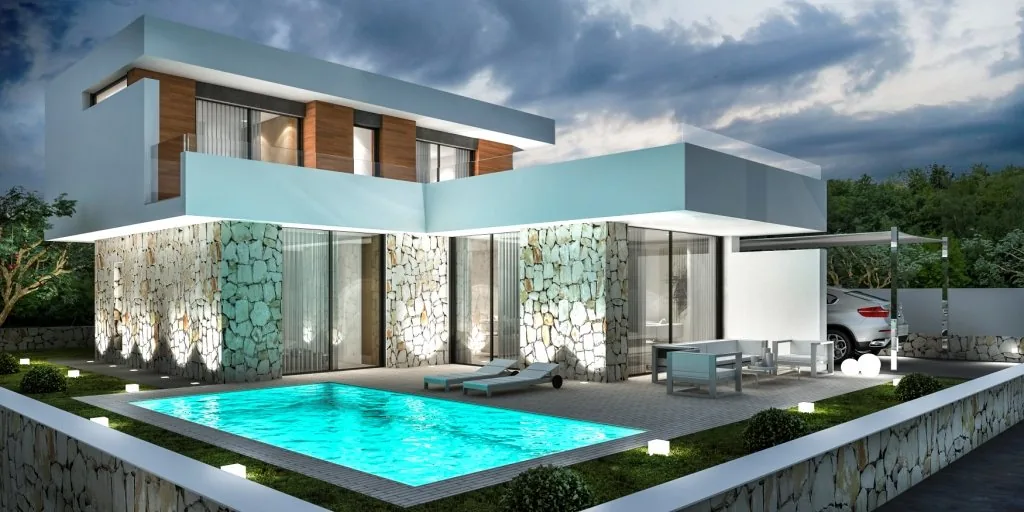
Cement
Cement cladding is a concrete finish, widely used on facades. It is durable and can be left as concrete or painted, and it gives a property a more rustic and contemporary look.
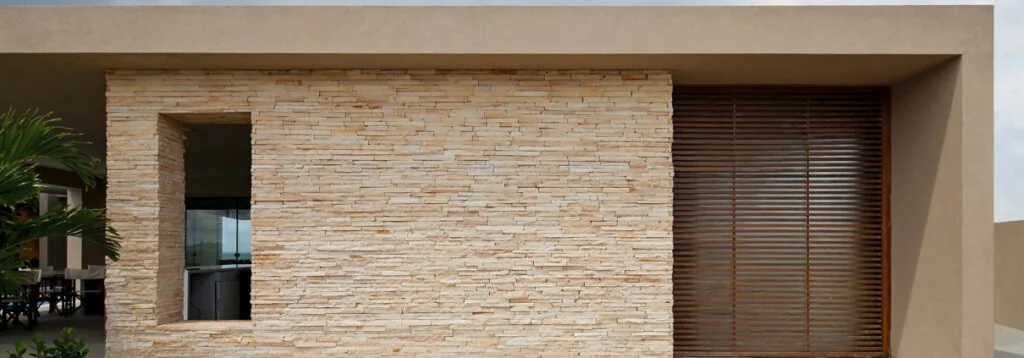
Wood
Wood cladding gives a house a warm, welcoming appearance.
Wood is durable, but it needs maintenance. Varnish and waterproofing should be reapplied regularly.
Ceramic
Ceramic is a versatile choice and can be used in many ways in different outdoor spaces.
It is straightforward to install and provides thermal protection, helping keep the interior at a more comfortable temperature.
Porcelain and ceramic tiles are also practically waterproof, which makes them suitable for areas with high humidity.
Natural Stone
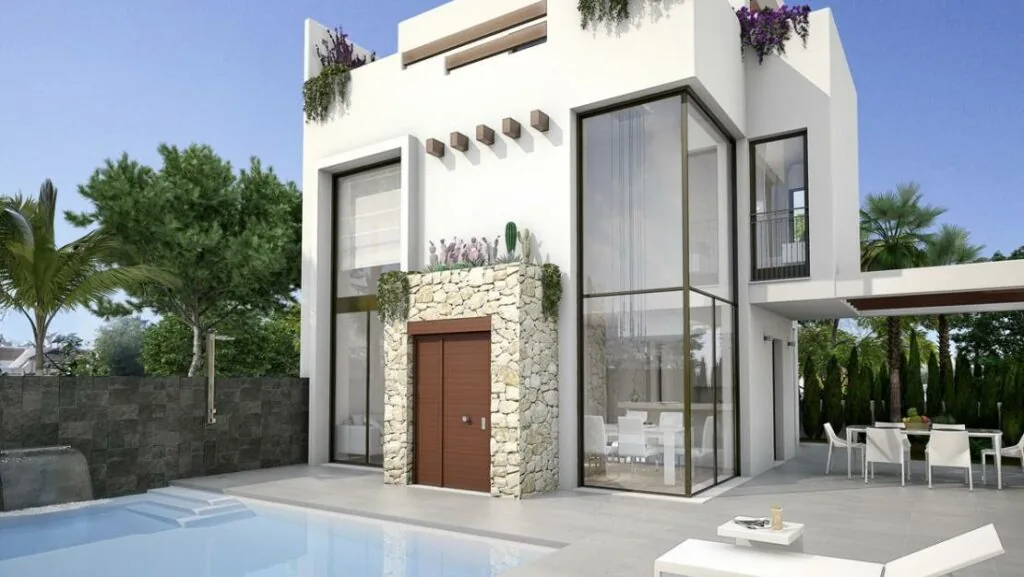
Natural stone is used on facades and in outdoor areas such as terraces and gardens, where it gives the space a more rustic character.
A cheaper alternative is cladding that imitates stone, made from ceramic pressed to look like rock. The construction differs, but the appearance is similar, and both resist changes in weather.
Paint
Paint is the most economical option here. It is easy to apply and allows a free choice of the colors and shades available on the market.
A painted finish, however, needs frequent maintenance, since it is more prone to stains and peeling than the other options.
Which cladding is best for a facade?
The facade is the first thing anyone sees of a house, so appearance matters. It is also the part of the building most exposed to the weather, so durability matters just as much. Of the options above, stone, cement and ceramic are usually the most resistant, while wood and paint need more maintenance.