A pool adds value to a property, but the type has to be chosen deliberately. The options differ in cost, in how they are built, and in how much maintenance they need later.
Choosing the material is the main decision. The types below are not distinguished by shape, size or depth: those follow the type of development and the architectural design. What changes is the finish or cladding, which at first glance looks similar from one pool to the next but behaves differently in cost, cleaning and maintenance.
Masonry or Reinforced Concrete
This is the type most people picture when they think of a pool, and its main advantage is versatility. The shape is not limited by the material, and almost any cladding can be used, from porcelain tiles to natural stone.
The main disadvantages are price and time. A masonry pool needs a design and careful waterproofing to protect against leaks over the years, and it takes longer to build than the other types described here.
Precast Slab
A precast pool saves time and needs less labor on site, because part of the structure is installed rather than built there. Some work still has to be done on site, such as the hydraulics, and it has to be planned in advance. Ground preparation is the same as for a masonry pool.
Installation and waterproofing need the most care, because once the pool is finished both are hidden under the tiles and the water.
Sand Pools
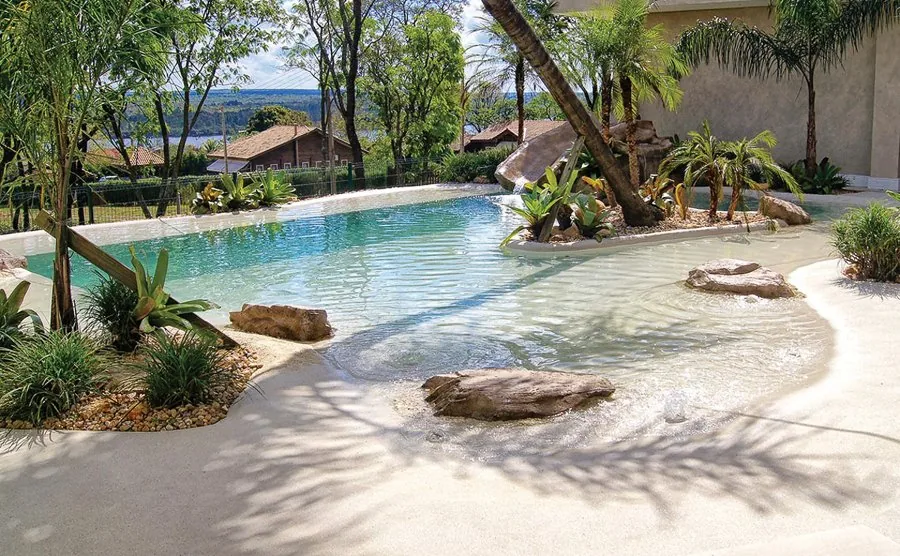
Sand pools are the most exclusive option. The structure is reinforced concrete, finished with a mixture of mineral sands and resin, which gives a tropical effect as if the pool were a small artificial beach.
The drawback is cost. For most buyers of this type, however, price is not the main concern, and many models include a hot tub.
Fiberglass
Fiberglass stands out for its affordable price and quick installation. It is also prefabricated, and easy to clean and maintain.
The downside is the limited range of shapes, which leaves less freedom to customize the space.
Glass
Glass pools are among the most admired and the most expensive. They appear in resorts, hotels and luxury residences, and their great advantage is the aesthetic value they bring to the surroundings.
Some people assume glass is dangerous, but with correct installation and use it is one of the safest and most reliable materials.
Vinyl
Vinyl is practical and versatile. It acts as the cladding of a masonry pool instead of tiles, and it is cheaper and faster to install. Vinyl lining adapts to any pool shape and is the cheapest material on this list.
Before choosing it, check how the pool will be filled for the first time. A pool takes a large volume of water, and the supply at the plot decides how it gets there.
There is no shortage of options, and each one has its advantages and disadvantages. The best choice depends on the type of work and on what you want from the project. Once the material is decided, it is easier to work through the remaining questions of shape and size.